
Nutritionist
Nutritionists are the heart of a patient's health by using their knowledge of the science of food to help individuals and groups make the right choices about what they eat.
Working life
You'll teach and inform the public and health professionals about diet and nutrition. You'll aim to promote good health and prevent disease in individuals and communities.
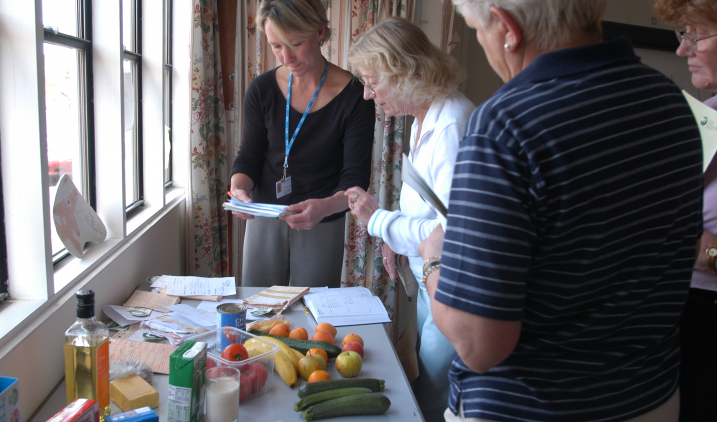
Nutritionists work in
- public health
- the community
- health projects
- industry
- their own private practice
- charities and voluntary organisations
- overseas aid projects
- research
Your work as a nutritionist could involve
- educating individuals and groups (with a lot of contact with the public)
- making policy to shape nutritional advice and guidelines for communities (with less or no contact with the public)
Who will I work with?
You may work with health care professionals such as nurses and dietitians. You may also work with other agencies such as schools or voluntary organisations.
Dietitians and nutritionists have different roles and training and are regulated by different bodies.
Find out more about the work and training of dietitians
Entry requirements
There is no set entry route to become a nutritionist. Most nutritionists have a qualification in nutrition, usually a degree or a Masters.
The Association for Nutrition (AfN) maintains the UK Voluntary Register of Nutritionists (UKVRN) to distinguish nutrition practitioners who meet rigorously applied training, competence and professional practice criteria. There are three categories of UKVRN registrant:
- registered nutritionist (RNutr) with nutrition specialism in public health, nutrition science, sport & exercise, food or animal nutrition
- associate nutritionist (ANutr)
- fellow of AfN (FAfN)
All registrants have a degree in nutrition sciences or substantial peer-recognised professional nutrition experience and adhere to AfN Standards of Ethics, Conduct and Performance.
For more information about registering on the UKVRN, please contact the Association for Nutrition
There is a list of accredited courses on the AfN website. Courses may have different titles, including
- human nutrition
- public health nutrition
- nutrition and public health
- food and nutrition
To get onto a nutrition degree course you usually need
- two or three A levels, including biology or chemistry, along with five GCSEs (grades A-C), including English language, maths and science
or alternative level 3 qualifications, such as
- BTEC, HND or HNC which includes biology or chemistry
- relevant NVQ
- science-based Access course
- equivalent Scottish or Irish qualifications
However, each institution sets its own entry requirements, so it’s important to check carefully.
For a Masters you need a relevant degree or professional qualification.
Skills and personal characteristics needed
Nutritionists need to be
- interested in science and food
- positive and able to motivate others
- understanding of other people and their lifestyles
- able to explain complex things simply
You'll also need
- an understanding of science
- organisation skills
- communication skills
- business skills for private/freelance work
Training and development
You will have the training you need to do the job which is likely to include an introduction to the area and local groups and agencies.
As mentioned above, nutritionists can apply to register with the Association for Nutrition (AfN). Some also become members of the Nutrition Society. Nutritionists need to make sure they keep their knowledge and skills up to date. Both AfN and the Nutrition Society offer training courses and conferences where nutritionists can update their skills and network with others doing similar work.