
Social worker
Social workers make a difference to individuals and families by helping them live their lives more successfully.
Working life
As a social worker, you'll work with people to find solutions to their problems. This may be helping to protect vulnerable people from harm or abuse or supporting people to live independently.
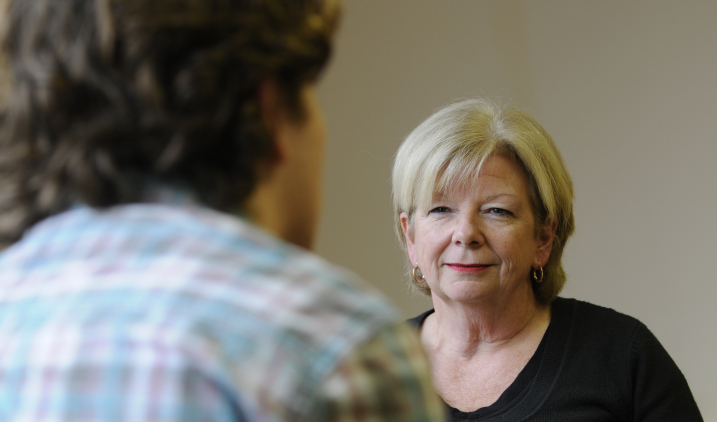
You'll work with clients, their families and others around them and with different client groups including:
- the elderly
- children with disabilities
- teenagers with mental health problems
- young offenders
- adults with learning disabilities, mental health problems or physical disabilities
- people with alcohol, drug or other substance misuse problems
- refugees and asylum seekers
- families at risk of breaking down
- children who need to live apart from their families
- foster carers and adopters
- children who are at risk of abuse or neglect
- carers
You may specialise in a particular client group. Their work can involve:
- visiting clients wherever they are (which could be at home or in, for example, a care home, hospital, hostel or prison)
- assessing clients’ needs
- organising support
- making referrals to other services and agencies
- keeping detailed records
- attending meetings
An important part of the work is building a professional relationship with the client so that you and the social worker and client can work together to make changes.
Pay and benefits
Social workers working in the NHS are paid on the Agenda for Change (AfC) pay system. You would typically start on AfC band 6. With further training and experience, you could apply for more senior positions (such as primary mental health worker) at bands 7, and above.
You'll also
- make a difference
- be able to work flexibly or part-time
- be able work anywhere in the world
- have an excellent pension scheme
- get good holiday entitlement
- get NHS discounts in shops and restaurants
Most social workers in the NHS work standard hours, which are likely to be around 37.5 a week. They may work some evenings or weekends. Terms and conditions will usually be different for social workers working outside of the NHS.
How to become a social worker
You must be registered with Social Work England so you'll need to successfully complete an approved degree or postgraduate programme in social work. Courses take three or four years full time. Some degrees combine social work with mental health or learning disability nursing - use our course finder to search for these combined courses.
A degree apprenticeship standard in social work has been approved for delivery. To get onto a degree apprenticeship, you will need to apply for an apprentice position with a health care provider. You will usually need level 3 qualifications to get onto a degree apprenticeship.
You can search for vacancies on the NHS Jobs website and Find an Apprenticeship website.
Entry requirements
You'll usually need two or three A levels, along with five GCSEs (grades 4-9/A-C), including English and maths.
Or you could have alternative qualifications, including:
- BTEC, HND or HNC
- relevant NVQ
- health- or social care-based access course
- equivalent Scottish or Irish qualifications
To get onto a Masters course you normally need an honours degree. However, each institution sets its own entry requirements, so it’s important to check carefully.
If you already have a degree in another subject, there are several routes for you to become a social worker:
- take a postgraduate qualification (Diploma or Masters) in social work. Courses take two years full time or up to six years part time.
- train through Step up to Social Work which takes 14 months and combines work and study
- apply for the Frontline 2-year programme combining study with supervised practical work in child protection
- apply for the 2-year Think Ahead fast-track scheme to become a mental health social worker. The scheme blends academic learning with extensive on-the-job experience.
You will need to show that you have an understanding of social work and experience of working with clients. This can be from paid or voluntary work. Or it could be from your own life experience, for example, as a carer for a friend or relative.
Must-have skills
Social workers need to:
- be able to work under pressure
- deal with very challenging behaviour
- organise their own workload
- be understanding of other people’s lifestyles
- work with people from all walks of life
- be happy visiting people where they live
You'll also need
- organisation skills
- empathy (able to see things from other points of view)
- relationship-building skills
- resilience
- problem-solving skills
- motivational skills
Your training
Courses differ but all include:
- law as it applies to social work
- ethics and values
- assessments and interventions
- mental health, disability and other issues
- practical work with clients and placements in social work settings
Where the role can lead
You could take further qualifications related to social work in, for example, counselling or mediation. Once qualified, many social workers join the British Association of Social Workers (BASW). Social workers have to keep their skills and knowledge up to date with annual CPD (continuing professional development). BASW runs courses, conferences and seminars where social workers can exchange ideas and update their skills.
You may decide to specialise in a particular client group or issue such as the elderly, young people, substance misuse, mental health or domestic violence. You could train as a high intensity therapist, as part of the NHS Talking Therapies service.
With experience, you could become a senior social worker, supervising the work of other social workers, or a primary mental health worker working in child and adolescent mental health services. You may be able to progress into a management position, responsible for a department or an area.